
Promotional text messages give businesses a direct way to reach customers with relevant offers, product updates and exclusive rewards. Whether you’re encouraging a first purchase, promoting a flash sale or re-engaging inactive customers, a well-timed SMS can generate interest and drive action. Below, we’ve shared 21 practical examples, alongside advice on how to use them effectively.
What are promotional SMS messages?
Promotional SMS messages are marketing texts sent by businesses to customers who have agreed to receive them. They typically communicate special offers, discounts, product launches, loyalty rewards and other incentives designed to encourage engagement or purchases. Their direct, mobile-friendly format makes them useful for reaching customers throughout the buying journey.
Unlike transactional messages, which provide essential information such as order confirmations or delivery updates, marketing texts are designed to influence customer behaviour.
Businesses can use them to:
- Increase sales through exclusive offers and discount codes.
- Promote new products, services and seasonal campaigns.
- Encourage repeat purchases and customer loyalty.
- Recover abandoned shopping baskets.
- Generate interest in events and product launches.
- Re-engage customers who haven’t purchased recently.
For retailers, restaurants, takeaways and hospitality businesses, SMS offers a straightforward way to communicate with customers and encourage them to take action.
What are the different types of SMS promotions?
SMS promotions can be adapted to different stages of the customer journey, from welcoming new subscribers to rewarding loyal customers. The most effective campaigns have a clear purpose, a relevant message and an obvious next step.
| Campaign type | Main objective | Best time to use |
| Welcome offers | Encourage first purchases | Immediately after sign-up |
| Birthday rewards | Build customer relationships | Around a customer’s birthday |
| Flash sales | Generate immediate sales | During short promotional windows |
| Restock alerts | Recover missed sales | When popular products return |
| Seasonal offers | Increase seasonal demand | Before and during key events |
| Loyalty rewards | Encourage repeat purchases | When customers earn rewards |
| Abandoned basket reminders | Recover lost revenue | Shortly after basket abandonment |
| Winback campaigns | Re-engage inactive customers | After a period of inactivity |
| Product launches | Generate awareness and demand | Before and during a launch |
| Event invitations | Increase attendance | Ahead of an event |
21 promotional text message examples for businesses
The best marketing text messages are concise, relevant and focused on one clear action. Below are 21 examples covering discounts, seasonal campaigns, loyalty incentives, product launches and customer retention. Each can be adapted to suit your brand, audience and campaign objectives.
Welcome and incentive-based messages
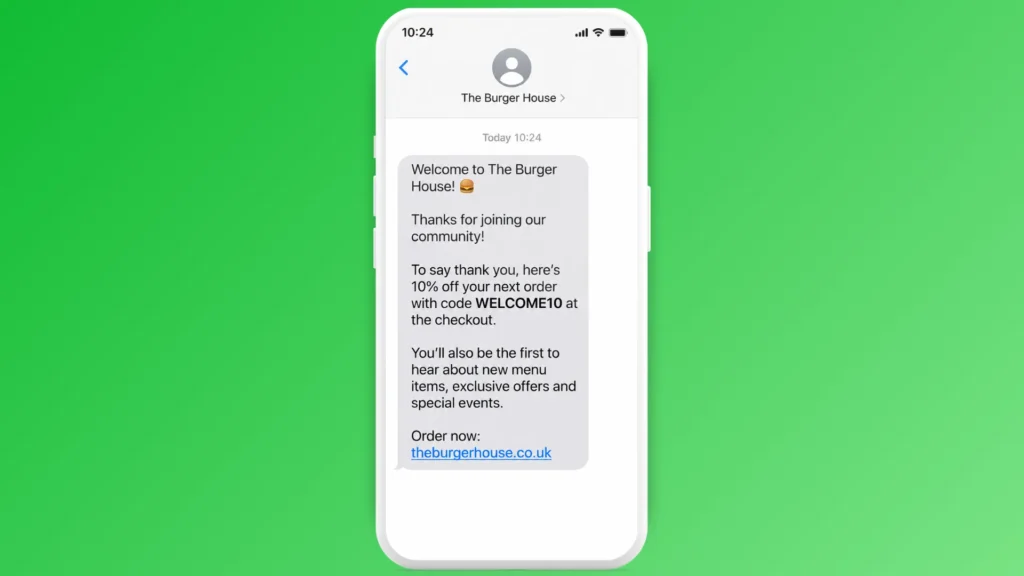
These messages help businesses make a positive first impression and encourage customers to take their first steps towards purchasing.
1. How can you welcome new customers with a discount?
A welcome offer gives new subscribers an immediate reason to interact with your business. Offering a first-purchase discount can help turn initial interest into a sale.
Promotional message example:
“Welcome to [Your Brand]! Enjoy 10% off your first order with code WELCOME10. Start shopping: [link]”
Why it works: The message acknowledges the customer’s interest and provides an immediate incentive. A simple discount code and direct link make redemption straightforward.
2. How can you use birthday offers to engage customers?
Birthday messages add a personal touch to your marketing and give customers a reason to celebrate with your brand. An exclusive reward can help strengthen relationships and encourage purchases.
Promotional message example:
“Happy Birthday, [Name]! Celebrate with 20% off your next order. Use code BDAY20 before [expiry date]: [link]”
Why it works: Personalisation makes the message feel more relevant, while the birthday incentive creates a natural reason to shop.
3. How can referral rewards help grow your customer base?
Referral campaigns encourage existing customers to recommend your business to others. Offering a reward for successful referrals can help generate new interest while rewarding existing customers.
Promotional message example:
“Share the love! Invite a friend to [Your Brand] and you’ll both receive £10 off your next order. Find out more: [link]”
Why it works: Both customers receive an incentive, making the offer mutually beneficial.
Remember to ensure any messages sent to referred friends comply with applicable marketing consent requirements.
4. How can thank-you messages encourage repeat purchases?
Following a purchase, a sending a simple message can reinforce a positive customer experience, encouraging a repeat purchase and loyal customer base. Including a small incentive gives customers another reason to return.
Promotional message example:
“Thanks for shopping with [Your Brand]! Here’s 10% off your next order as a little thank you. Use code THANKYOU10: [link]”
Why it works: It combines customer appreciation with an incentive to make another purchase.
Flash sales and urgency-driven messages
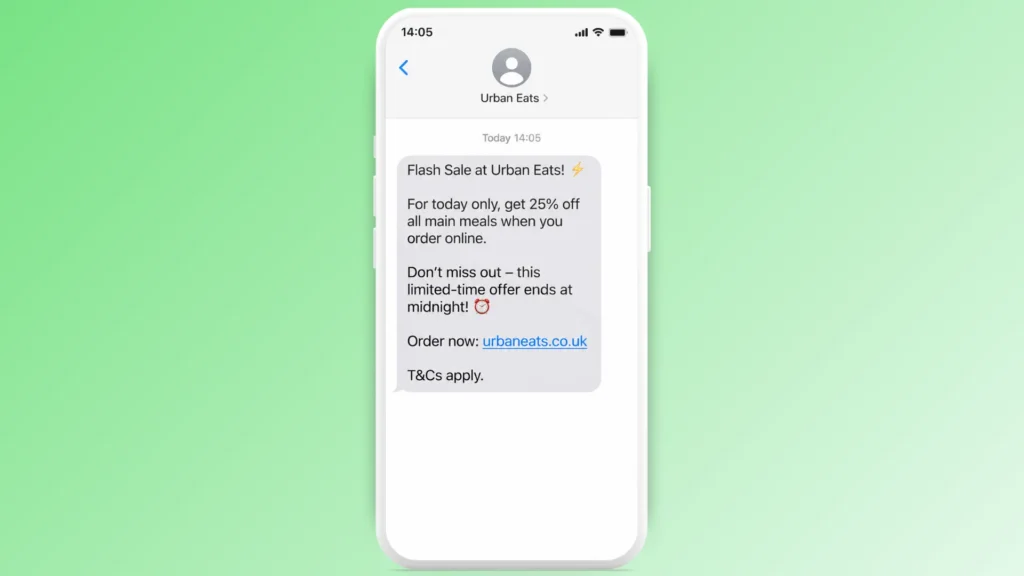
Time-sensitive SMS campaigns can encourage customers to act sooner rather than putting off a purchase. However, offers should always have genuine deadlines or stock limitations.
5. How can flash sales generate immediate purchases?
Flash sales offer significant savings for a limited period. They work particularly well when businesses want to generate a short burst of sales or promote selected products.
Promotional message example:
“FLASH SALE! Enjoy 50% off selected products for the next 24 hours. Use code FLASH50 at checkout: [link]”
Why it works: The clear discount and limited timeframe give customers a compelling reason to visit the website.
6. How can restock alerts recover missed sales?
When a popular product sells out, customers may move on to alternatives. A restock notification lets interested shoppers know when the item becomes available again.
Promotional message example:
“It’s back! [Product Name] is available again. Get yours before it sells out: [link]”
Why it works: The message reaches customers who have already demonstrated an interest in the product, making it highly relevant.
7. How can seasonal promotions increase sales?
Seasonal campaigns connect your offers to occasions and events that customers are already interested in, such as Christmas, Easter, summer holidays and Black Friday.
Promotional message example:
“Our Summer Sale has arrived! Save up to 40% on selected favourites. Shop the collection before the offer ends: [link]”
Why it works: Seasonal relevance helps the promotion feel timely, while the discount gives customers a reason to act.
8. How can last-chance offers encourage customers to purchase?
Last-chance messages remind customers that an existing offer is about to expire. They are particularly useful for following up on campaigns that have already generated interest.
Promotional message example:
“LAST CHANCE! Your 30% discount expires at midnight. Use code LASTCHANCE30 before it’s too late: [link]”
Why it works: The message reinforces the deadline and encourages customers who were previously considering the offer to complete their purchase.
9. How can countdown messages increase campaign engagement?
Countdown messages build anticipation by highlighting how little time remains before a promotion ends. They can be used as a follow-up to an earlier sale announcement.
Promotional message example:
“Only 4 hours left! Save 50% across selected products before our flash sale ends. Shop now: [link]”
Why it works: A specific timeframe makes the deadline clear and gives customers a final opportunity to take advantage of the offer.
10. How can product bundles increase average order value?
Bundled offers encourage customers to purchase complementary products together, often at a lower combined price than buying them individually.
Promotional message example:
“More for less! Get [Product A] and [Product B] together for just £[X]. This exclusive bundle won’t be around for long: [link]”
Why it works: Customers can see the combined value, while businesses have an opportunity to increase basket size.
Loyalty and customer retention messages
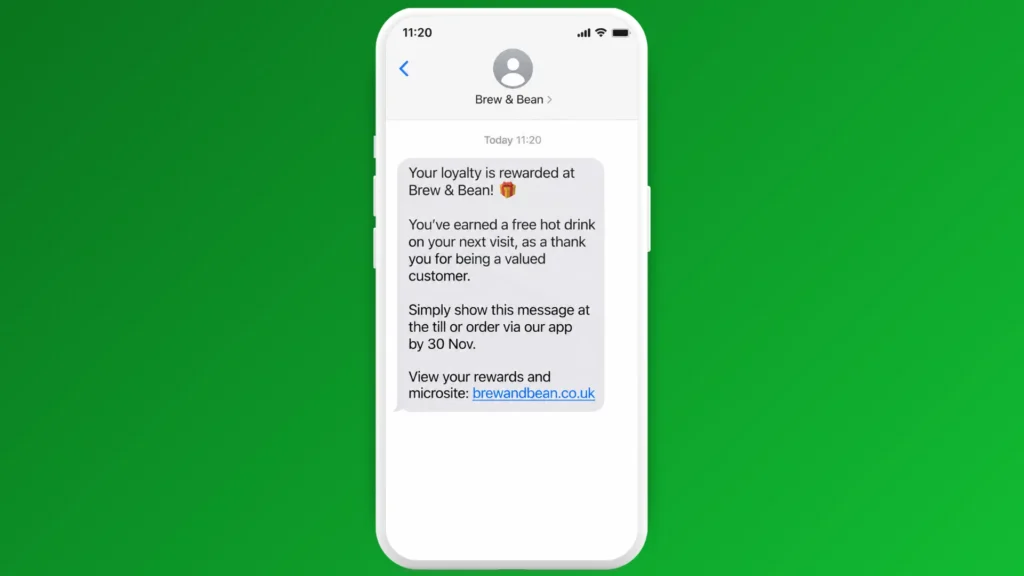
Existing customers are an important source of repeat revenue. Rewarding their engagement with exclusive offers and relevant recommendations can help strengthen long-term relationships.
11. How can exclusive discounts reward loyal customers?
VIP offers make customers feel recognised and give them access to benefits that aren’t available to everyone.
Promotional message example:
“You’re on our VIP list! Enjoy an exclusive 20% off your next purchase with code VIP20. Your reward is waiting: [link]”
Why it works: Exclusivity makes the customer feel valued and provides an additional incentive to shop.
12. How can loyalty programme messages encourage repeat purchases?
Loyalty programme reminders help customers understand the value of their membership and encourage them to redeem rewards or continue collecting points.
Promotional message example:
“Thanks for being part of [Brand] Rewards! You’ve earned 500 points, worth £10 off your next purchase. Redeem your reward: [link]”
Why it works: Customers are reminded of the benefits they’ve already earned, making another purchase more appealing.
13. How can personalised product recommendations improve engagement?
Product recommendations based on previous purchases or browsing behaviour can make marketing messages more relevant to individual customers.
Promotional message example:
“Hi [Name], loved your recent purchase of [Product]? You might also enjoy [Recommended Product]. Discover more: [link]”
Why it works: Relevant recommendations help customers discover complementary products and can increase the likelihood of another purchase.
14. How can exclusive sneak peeks build anticipation?
Giving customers early access to upcoming products or collections can make them feel part of an exclusive community.
Promotional message example:
“Something new is coming! Get exclusive early access to our latest collection before everyone else. Be first to shop: [link]”
Why it works: Early access creates anticipation and gives customers a reason to engage before a wider release.
Re-engagement and winback messages
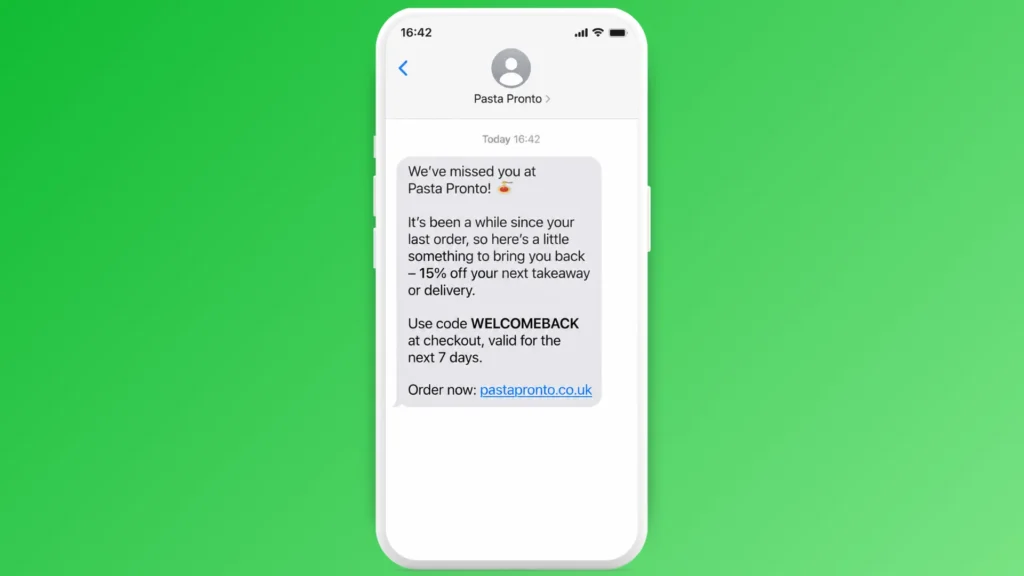
Not every customer will purchase regularly. Targeted messages can help businesses reconnect with inactive customers and give them a reason to return.
15. How can abandoned basket reminders recover lost sales?
Abandoned basket automated messages remind customers about products they considered purchasing but didn’t complete checkout for. A timely reminder, potentially combined with an incentive, can help recover missed revenue.
Promotional message example:
“Still thinking it over? Your [Product Name] is waiting in your basket. Complete your order today and enjoy 10% off with code CART10: [link]”
Why it works: The message brings the product back to the customer’s attention and removes some of the hesitation around completing the purchase.
16. How can winback campaigns re-engage inactive customers?
Winback campaigns target customers who haven’t purchased or interacted with a business for a set period. A relevant incentive can help reignite their interest.
Promotional message example:
“We miss you, [Name]! Come back to [Brand] and enjoy 15% off your next order with code COMEBACK15. Your offer is waiting: [link]”
Why it works: The personalised message acknowledges the customer relationship and provides a reason to return.
17. How can feedback requests strengthen customer relationships?
Feedback messages encourage customers to share their experiences and give businesses valuable insight into customer satisfaction. They can also help identify opportunities for improvement.
Promotional message example:
“How was your recent experience with [Brand]? We’d love your feedback! Share your thoughts here: [link] and receive a thank-you reward.”
Why it works: It makes providing feedback straightforward and shows customers that their opinions matter.
If you offer an incentive for feedback, make it clear that the reward is not dependent on leaving a positive review.
Product launches and special events
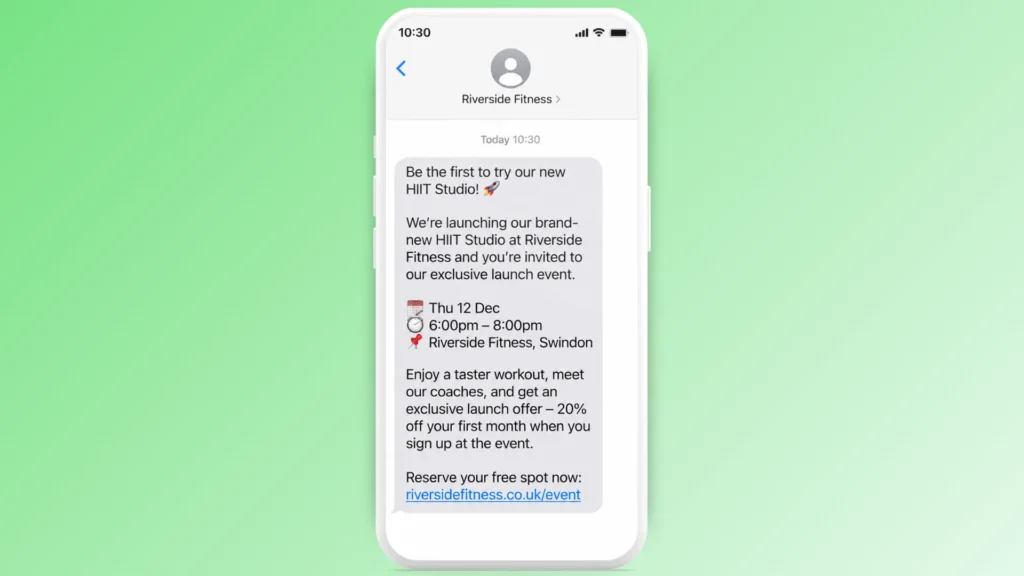
New products and special occasions provide opportunities to generate excitement, increase awareness and bring customers back to your business.
18. How can SMS help promote a new product launch?
Launching a new product is an opportunity to reconnect with your audience and generate early interest. A short message can announce availability and direct customers to explore the release.
Promotional message example:
“It’s finally here! Discover our brand-new [Product Name] and enjoy 15% off today with code NEW15. Explore the launch: [link]”
Why it works: The announcement creates excitement, while the introductory discount provides an incentive to purchase.
19. How can product teasers build anticipation?
Teaser messages give customers a glimpse of something new without revealing everything. They can be used in the lead-up to seasonal collections, launches and special campaigns.
Promotional message example:
“Something exciting is coming this [Season]! Our new [Collection Name] launches soon. Keep an eye on your messages for an exclusive first look.”
Why it works: It creates curiosity and encourages customers to look out for future communications.
20. How can event invitations drive attendance?
Businesses can use SMS to invite customers to store openings, exclusive shopping events, restaurant launches and other in-person experiences.
Promotional message example:
“You’re invited! Join us for the grand opening of [Store Name] on [Date]. Enjoy exclusive offers, giveaways and more. Save your place: [link]”
Why it works: The direct invitation makes customers aware of the event and provides an easy way to register or RSVP.
21. How can limited-edition releases create exclusivity?
Limited-edition products can generate interest by offering something customers cannot purchase indefinitely. Businesses can use SMS to announce availability and highlight genuine stock limitations.
Promotional message example:
“Just dropped! Our limited-edition [Product Name] is now available. Get yours while stocks last: [link]”
Why it works: Exclusivity and genuine scarcity can motivate customers who are interested in the product to purchase sooner.
How can you create effective SMS promotions?
Successful SMS campaigns combine relevant offers, audience segmentation, clear messaging and measurable objectives. Rather than sending the same promotion to everyone, businesses should tailor their communications to customer behaviour, purchasing history and interests.
Here are five ways to improve your campaigns.
1. How should you segment your SMS audience?
SMS list segmentation helps ensure customers receive messages that are relevant to them.
Rather than sending every promotion to your entire database, consider creating groups based on:
- Purchase history: Recommend complementary products or reward frequent shoppers.
- Customer activity: Re-engage customers who haven’t purchased recently.
- Location: Promote local events, store openings or nearby offers.
- Interests: Send relevant product announcements and category-specific discounts.
- Loyalty status: Provide exclusive rewards to VIP customers and programme members.
For example, a restaurant could send a lunchtime offer to customers who regularly order during the day, rather than sending the same message to its entire database.
2. How can you write an effective promotional text message?
An effective message communicates its purpose quickly and makes it easy for customers to respond.
To write a strong marketing message, follow these principles:
- Keep it concise: Focus on one main offer or announcement.
- Make the benefit clear: Explain what the customer receives.
- Personalise where appropriate: Use customer names, preferences or relevant purchase information.
- Include a clear call to action: Tell customers exactly what to do next.
- Use a direct link: Make it easy to visit your website, redeem an offer or complete a purchase.
- Include an expiry date where relevant: Make genuine deadlines clear.
A simple formula to follow is:
Brand + Offer + Benefit + Call to Action
For example:
“[Brand]: Enjoy 20% off your next order this weekend! Use code SAVE20 at checkout: [link]”
3. When is the best time to send marketing text messages?
Timing can influence how customers respond to your campaigns. Consider your audience, the nature of the offer and when customers are most likely to take action. Here are the best times to send SMS marketing texts:
| Campaign | Suggested timing |
| Restaurant lunch offers | Late morning |
| Restaurant dinner promotions | Mid to late afternoon |
| Retail flash sales | Early in the campaign |
| Birthday offers | On or shortly before the birthday |
| Abandoned basket reminders | Shortly after abandonment |
| Loyalty rewards | When a reward is earned |
| Event invitations | Several days before the event |
| Winback campaigns | After a meaningful period of inactivity |
These are starting points rather than universal rules. Test different sending times and compare engagement and conversion results.
4. How can you personalise SMS promotions?
SMS personalisation goes beyond inserting someone’s first name into a message. It involves using relevant customer information to make communications more useful.
For example:
- Recommend products based on previous purchases.
- Send birthday discounts or anniversary rewards.
- Promote offers based on customer preferences.
- Remind loyalty members about available points.
- Tailor messages to local stores or regional events.
The more relevant the message, the more likely it is to capture the customer’s attention.
5. How can you measure the success of an SMS campaign?
Tracking campaign performance helps businesses understand which offers and messages generate the best results.
Important metrics:
| Metric | What it tells you |
| Delivery rate | The proportion of messages successfully delivered |
| Click-through rate | How many recipients click your links |
| Conversion rate | How many recipients complete the desired action |
| Redemption rate | How many customers use a promotional code or offer |
| Revenue generated | The sales attributed to the campaign |
| Opt-out rate | How many recipients unsubscribe |
Use trackable links, unique promotional codes and appropriate analytics to understand how campaigns perform. Where possible, compare results against a control group to establish whether a promotion genuinely influenced customer behaviour.
What should businesses consider before sending promotional text messages?
Businesses must ensure their marketing messages comply with UK data protection and electronic marketing rules. This includes having an appropriate legal basis to send messages, identifying the sender and providing a simple way for recipients to opt out.
Before launching a campaign, consider the following:
- Consent: Ensure you have valid consent or meet the requirements of an applicable PECR soft opt-in.
- Audience permissions: Check that your contact list is suitable for the type of marketing you intend to send.
- Sender identification: Make it clear which business is contacting the recipient.
- Opt-outs: Include a straightforward way for customers to stop receiving marketing messages.
- Data management: Maintain accurate records of permissions and opt-out requests.
- Frequency: Avoid sending excessive messages that could frustrate customers.
The Information Commissioner’s Office (ICO) provides guidance on electronic mail marketing.
Requirements can differ depending on whether you’re contacting an individual subscriber or a corporate subscriber, so businesses should check the rules relevant to their audience.
Frequently asked questions about promotional text messages
A promotional text message might advertise a discount, special offer or new product. For example:
“Enjoy 20% off your next order at [Brand]! Use code SAVE20 at checkout. Shop now: [link]”
An effective message communicates the offer clearly and includes a simple next step.
Start by identifying the purpose of your campaign and the offer you want to communicate. Keep the message concise, explain the customer benefit, include a clear call to action and add a relevant link or discount code. Always ensure your message is appropriate for the audience receiving it.
Most promotional messages should include:
- Your business or brand name.
- The main offer or announcement.
- Any relevant terms or expiry dates.
- A clear call to action.
- A link or promotional code where appropriate.
- An opt-out instruction.
Yes. SMS can be a useful marketing channel for small businesses because it provides a direct way to communicate offers, announce events and encourage repeat purchases. Restaurants, independent retailers and local service providers can use it to reach existing customers without needing a large advertising budget.
There is no universal sending frequency. It depends on your audience, the value of your offers and customer expectations. Focus on sending relevant messages rather than increasing volume. Monitor engagement and opt-out rates to understand whether your frequency is appropriate.
Promotional messages are designed to encourage engagement or purchases, such as discount offers and product announcements. Transactional messages provide information about an existing interaction, such as order confirmations, delivery updates and appointment reminders.
The distinction matters because different marketing and compliance requirements may apply.
Yes. SMS and Rich Communication Services (RCS) can complement each other within a wider customer communication strategy.
SMS provides a straightforward text-based channel, while RCS supports richer experiences, including branded messaging, images, product carousels, suggested replies and interactive buttons on supported devices.
Businesses can use each channel depending on the campaign objective, audience and device compatibility.
How can Text Management help with your SMS marketing?
Promotional campaigns can be a valuable part of your wider customer communication strategy, but creating, managing and measuring them takes the right tools and expertise.
At Text Management, we help businesses communicate with customers through managed SMS campaigns and flexible messaging solutions.
Whether you need support planning and delivering campaigns or want greater control over your own messaging, we can help you find the right approach.
If you’re looking to improve your customer communications, get in touch with Text Management to discuss how our SMS solutions can support your marketing strategy.


